Map What Matters With Service Blueprinting
In this edition, we explore Service Blueprinting as a startup discovery method, using visual maps of journeys, touchpoints, and backstage work to expose risks before code. You’ll learn practical steps, workshop rituals, and story-driven tactics that align founders, designers, and engineers. Join the conversation by trying the exercises, sharing screenshots of your maps, and subscribing for deeper walkthroughs and templates tailored to early-stage realities.
Start With Journeys, Not Features
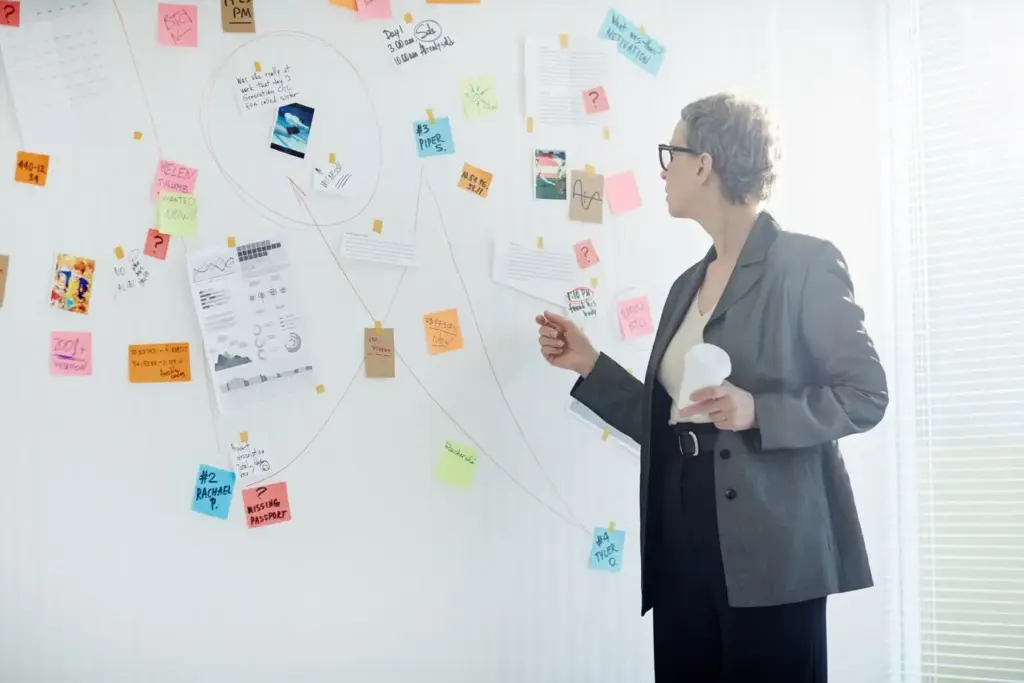
Early teams often chase features because they feel tangible, yet real progress begins by understanding the lived sequence customers experience and the hidden machinery supporting it. A well-facilitated map reveals promises made at the edge of your product, the hand‑offs behind the curtain, and the expectations shaped by other channels. By externalizing assumptions and aligning around concrete moments, you reduce waste, cut debate cycles, and open space for ethical, delightful service choices that build trust from day one.


Actors and Intent
Write concise roles—prospect, new customer, support agent, partner—and the goals they hold during key moments. Capture motivations, anxieties, and success definitions. Align on a primary journey for now, parking edge cases. Clear intent prevents over-scoping and keeps experimentation anchored to genuine outcomes rather than internal preferences.
Frontstage and Backstage Lines
Draw a line of interaction showing what is visible to customers, then a line of visibility revealing work customers do not see. Underneath, list internal actions, tools, SLAs, and data flows. Mapping these layers uncovers brittle hand‑offs, latency sources, and quality risks that prototypes often hide.
Gathering Raw Signals
Great maps are fed by real-world signals, not imagination alone. Combine interviews, contextual observation, and scrappy data to understand behaviors, constraints, and phrases customers use. Favor small, frequent field trips over grand research plans. The goal is momentum: actionable insight this week, tested again next week, continuously.
Interview for Moments
Ask customers to walk you through a recent episode, step by step, including what they saw, said, did, and felt. Probe for triggers, delays, and workarounds. Avoid future hypotheticals and opinions. Concrete stories slot neatly into your map and generate immediate opportunities for targeted experiments.
Shadow the Real Work
Observe users performing tasks in their environment, whether a warehouse floor, a kitchen, or a browser with twenty tabs. Note interruptions, device switching, and who they message for help. Capture photos of artifacts with permission. Observation exposes invisible constraints that interviews alone miss, grounding your blueprint in reality. During one food delivery pilot, watching couriers revealed lobby access issues; a simple pre-arrival SMS with door codes improved on-time rates dramatically.
Lightweight Quant to Calibrate
Supplement qualitative insight with just‑enough numbers: time-on-step, drop‑off at a hand-off, or average support touches before resolution. Use spreadsheets first. Trend lines clarify whether you improved anything. Numbers also focus debate, helping the team choose experiments that actually change outcomes rather than merely feel exciting.
Spotting Gaps, Risks, and Leverage
A map without decisions is wall art. Use it to find where customers struggle, where operations creak, and where value concentrates. Name specific failure points, moments that matter disproportionately, and policies that quietly shape experience. From there, frame testable bets and meaningful risks, sequenced to learn before you invest.
Scan for queues, re-entry loops, and repeated data entry. Identify long spans between frontstage promises and backstage fulfillment. Every hand‑off adds risk. Where latency clusters, propose automation, enablement, or orchestration experiments. Even tiny reductions in friction can cascade into higher activation, trust, and retention on the customer side.
Stuff goes wrong. Design graceful recovery: proactive notifications, human intervention standards, and refunds or credits rules. Map who notices first and who owns resolution. Clear recovery paths turn near‑misses into loyalty moments, especially for startups still earning credibility against established competitors with bigger safety nets. In one early MVP, a generous, transparent make‑right policy transformed angry cancellations into referrals.
From Map to Experiments
Discovery matters when it changes what you build. Convert insights into ranked opportunities, experiments, and a living roadmap. Use the map to define scope for an MVP slice, the supporting operations, and how you will measure value creation. Align stakeholders around clear trade‑offs and learning goals.
Workshop Habits and Community
Methods stick when they become habits supported by community. Structure short, regular sessions that keep the map alive and invite cross‑functional ownership. Share artifacts, ask for feedback, and learn in public. You will attract advisors, early customers, and partners who resonate with your clarity and momentum.
Run a One‑Hour Mapping Sprint
Time-box a focused session: recap goals, add fresh observations, refine moments, and flag uncertainties with colored tags. Close by selecting one opportunity and one risk to test. Keep energy high, visuals simple, and follow‑ups explicit. Repetition builds skill and makes the practice lightweight and fun.
Keep the Map Alive Each Week
Pin the map where decisions happen—standups, planning, investor updates. Annotate with metrics and learnings. Celebrate when a moment improves. Archive outdated paths rather than deleting, so progress stays visible. When the artifact drives conversation, it stops being homework and becomes the backbone of how you decide.
Share Your Blueprint and Subscribe
Post a sanitized snapshot of your current map, describe one insight it unlocked, and invite peers to critique. Ask readers to reply with blockers you should cover next. Subscribe for checklists, templates, and teardown videos, and bring a teammate along so shared language sticks faster.
All Rights Reserved.